

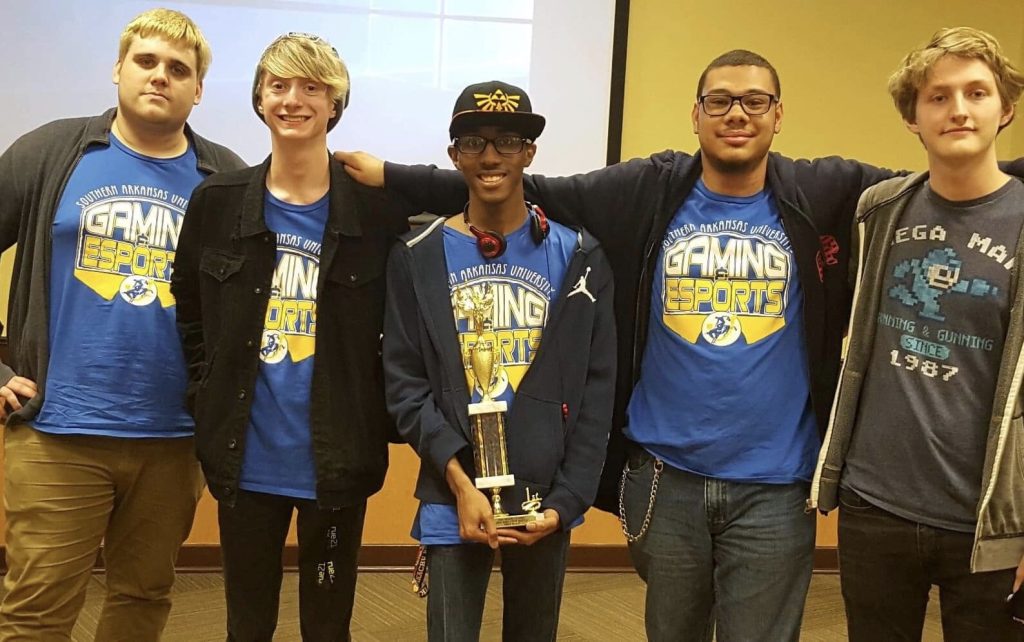

About Esports at SAU
Varsity: Mulerider Esports varsity teams represent Southern Arkansas University at the highest level of collegiate competition. Varsity teams compete against colleges and universities across the United States and Canada in organized collegiate leagues, tournaments, and championship events. Roster positions are highly competitive and are earned through skill, communication, teamwork, commitment, and overall performance. Scholarships may be available for qualifying varsity competitors.
Junior Varsity / Academy: Junior Varsity and Academy rosters provide competitive and developmental opportunities for players working toward a varsity position. These competitors participate in structured practices, scrimmages, tournaments, developmental events, and collegiate competitions when available. The program is designed to help players improve individual skill, communication, teamwork, strategy, and overall competitive readiness while providing a clear pathway toward future varsity opportunities.
Casual: Casual rosters allow students to participate in the Mulerider Esports community without the commitment or competitive requirements of a formal team. Casual players can connect with other students, participate in open play, community events, tournaments, watch parties, and other gaming activities throughout the year. Casual participation is open to students of all skill levels and is a great way to become involved with esports at SAU.
Competitive Placement: Mulerider Esports encourages ranked play as one of several tools for evaluating player skill and competitive readiness. Rankings, previous competitive experience, communication, teamwork, attitude, and performance during tryouts may all be considered when determining roster placement. Students who do not regularly participate in ranked play are still encouraged to attend open team tryouts held at the beginning of each semester.
Games
Varsity Teams:
- Apex Legends
- Call of Duty: CDL
- Call of Duty: Warzone
- Overwatch
- Marvel Rivals
- Rocket League
- League of Legends
- Rainbow 6 Siege
- NBA 2K: Play Now
- NBA 2K: Pro AM
- EA FC
- Madden
- NCAA CFB
- Deadlock
- Fortnite
- Super Smash Bros
- Valorant
Non-Varsity Teams:
- Brawlhalla
- Street Fighter 6
- Marvel Tokon
- Invincible VS
- Tekken 8
Competing Across the Collegiate Esports Landscape
Mulerider Esports competes in a wide range of national, regional, and open esports leagues and tournaments. Our teams regularly compete against colleges and universities from across the country and participate in regional events that offer additional opportunities for competition, development, and exposure.
Current and recent competitive organizations include:
- ECAC Esports | East Coast Athletic Conference
- GAC | Great American Conference
- PCL | PlayVs College League
- CCL | College Call of Duty
- CRL | Collegiate Rocket League
- CR6 | Collegiate Rainbow 6
- CAL | Collegiate Apex Legends
- CFGC | Collegiate FGC
- CRS | Collegiate Rival Series
- Local and Regional LAN Events
- Open and Invitational Tournaments
Built for Competition. Designed for Success.
The Mulerider Esports Arena, opened in Fall 2023, serves as the competitive home of SAU Esports. Designed specifically for Mulerider competitors, the arena features five dedicated competition computer labs, two console gaming rooms, and a streaming lab for practices, matches, broadcasts, and team development throughout the year.
The arena provides Mulerider Esports with a dedicated environment for competition, preparation, content creation, and team growth, giving our competitors the resources and space needed to perform at their best.
Southern Arkansas University offers a variety of esports scholarship opportunities for qualified students based on recruitment, competitive skill, performance, leadership, commitment, and overall contribution to the Mulerider Esports program.
All competitors are evaluated by SAU Esports staff for scholarship eligibility. Scholarship availability and award amounts may vary based on game title, roster position, competitive experience, individual performance, team needs, and available funding.
Prospective and current competitors are encouraged to consistently demonstrate strong communication, teamwork, sportsmanship, academic responsibility, and dedication to the program, as these qualities may be considered in the scholarship evaluation process.
SAU’s affordable tuition and innovative academic programs create exciting opportunities for students interested in gaming, technology, and esports. While the Computer Game and Animation Design programs offer pathways for students interested in game development, SAU Esports welcomes students from all majors and academic backgrounds. Through competitive gaming, teamwork, and community engagement, students can connect with others, develop valuable skills, and enjoy a fun, inclusive environment outside the classroom.
Contact

Mulerider Esports Director
sesmith@saumag.edu
Nelson Hall 115
(870)235-4047
Discord: Secmartins1#9239
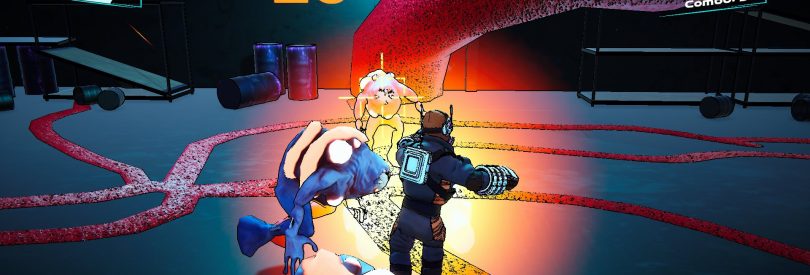
Learn more about the Game and Animation Design programs at SAU.

University Requirement (2 hours)
GSTD 1002 – Freshman Seminar
General Education (32 hours)
Note: 3 hours of fine arts/humanities requirements are included in the major. ART 2013 – Art Appreciation cannot fulfill the fine arts/humanities requirements.
Game and Animation Design (87 hours)
ART 1013 – Drawing I
ART 1023 – Three-Dimensional Design
ART 1033 – Concept Art or ART 1113 – Drawing II
ART 1043 – Two-Dimensional Design
ART 1103 – Introduction to Game Development
ART 2093 – Introduction to Playgramming
ART 2123 – Graphic Software Applications
ART 2133 – Basic Digital Photography
ART 2143 – Art History I
ART 2183 – Game Design Management
ART 2193 – Introduction to 3D Modeling Tools
ART 3053 – Animation I
ART 3093 – Physics of Animation
ART 3123 – Art History II
ART 3133 – 3D Character Design and Sculpture
ART 3143 – 3D Character Rigging
ART 3153 – Simulation Development I
ART 3223 – Illustration or ART 3543 – Figure Drawing
ART 4132 – Senior Capstone Review
ART 4153 – Animation II
ART 4173 – Simulation Development II
ART 4193 – Game Development Senior Project
CSCI 2103 – Computer Science I and CSCI 2101 – Computer Science I Lab
CSCI 2133 – Game Development
CSCI 3043 – Game Studio Workshop or CSCI 3913 – Virtual Reality Workshop
Select 3 hours from the following:
ART 4033 – History of Modern Art
ART 4063 – Art History Seminar I
ART 4073 – Art History Seminar II
Select 3 hours from the following:
ART 4013 – Special Topics in Art I
ART 4023 – Advanced Art Studio I
ART 4113 – Special Topics in Art II
ART 4123 – Advanced Art Studio II
ART 4163 – Advanced Level Visual Design
Select 6 hours from the following:
ART 3353 – Multimedia and Web Design I
ART 3363 – Advanced Digital Photography
ART 4353 – Multimedia and Web Design II
CSCI 2113 – Computer Science II and CSCI 2111 – Computer Science II Lab
DC 2333 – Fundamentals of Digital Cinema
DC 3333 – Intermediate Digital Cinema
ENGL 4043 – World Creation and Design
Total Hours – 121
Minor Requirements:
Game Design Minor (21 hours)
ART 1103 – Introduction to Game Development
ART 2183 – Game Design Management
ENGL 3003 – Advanced Professional Writing
CSCI 2133 – Game Development or ART 2093 – Introduction to Playgramming
CSCI 3043 – Game Studio Workshop or CSCI 3913 – Virtual Reality Workshop
Specialty Area (6 hours)
Select one of the following options:
Designer/Producer
SPCH 1113 – Introduction to Public Speaking
MGMT 3023 – Organizational Theory and Behavior
Designer/Writer
ENGL 4043 – World Creation and Design
THEA 3403 – Playwriting I
Game Systems Designer
GBUS 2013 – Statistics and Analytics I
ECON 2103 – Principles of Microeconomics or MATH 3043 – Applied Probability and Statistics I
- 2026-2027
- 2025-2026
- 2024-2025
- 2023-2024 [pdf]
- 2022-2023 [pdf]
- 2021-2022 [pdf]
- 2020-2021 [pdf]
- 2019-2020 [pdf]
- 2018-2019 [pdf]
- 2016-2017 [pdf]
- 2015-2016 [pdf]
- 2014-2015 [pdf]
- 2013-2014 [pdf]
| Department: | |
| Hours Required: | 121 |
| Categories: | Major, Undergraduate |
| Delivery: | On-Campus |
Have you ever dreamed of designing your own 3D games or a 3D prototype of a new product? Game animation and simulation is the perfect major for you! Students in-game animation and simulation design are taught 3D animation techniques as well as the production and management of game environments. They are also trained for a broad variety of scenarios that require prototyping 3D designs for manufacturers of medical equipment, transportation, and the military.
Courses in this program prepare students for professional practice in game, animation, and simulation design by applying technical, and theoretical skills to solve problems using open-source and other software applications. Upon completion of the program, students will be able to critically analyze, develop, and produce engaging mass media projects associated with a variety of entertainment, industrial, commercial, and educational fields.
Learning Goals
- Students will be able to communicate orally, visually and in written form to support a visual art or design decision.
- Students will understand art in terms of its civic and ethical impact.
- Students critically analyze visual design problems, synthesize information and create pieces with corresponding written or oral language to support their outcomes.
- Students employ traditional art techniques and technological knowledge necessary to work in the art and design community.
- Students use the tools and technology related to their specific concentration, and will acquire an informed voice as it pertains to art history.
software, engineering, computer, interface, game, gaming, design, animation, 3D, modeling, drawing, writing
